No chimney? How to get a wood burner anyway: false chimney breasts vs twin-wall flues
The two ways to have a real stove in a home with no chimney: a false chimney breast with the flue out through the back wall, or a twin-wall flue system. Pros, cons, timings and what to expect.
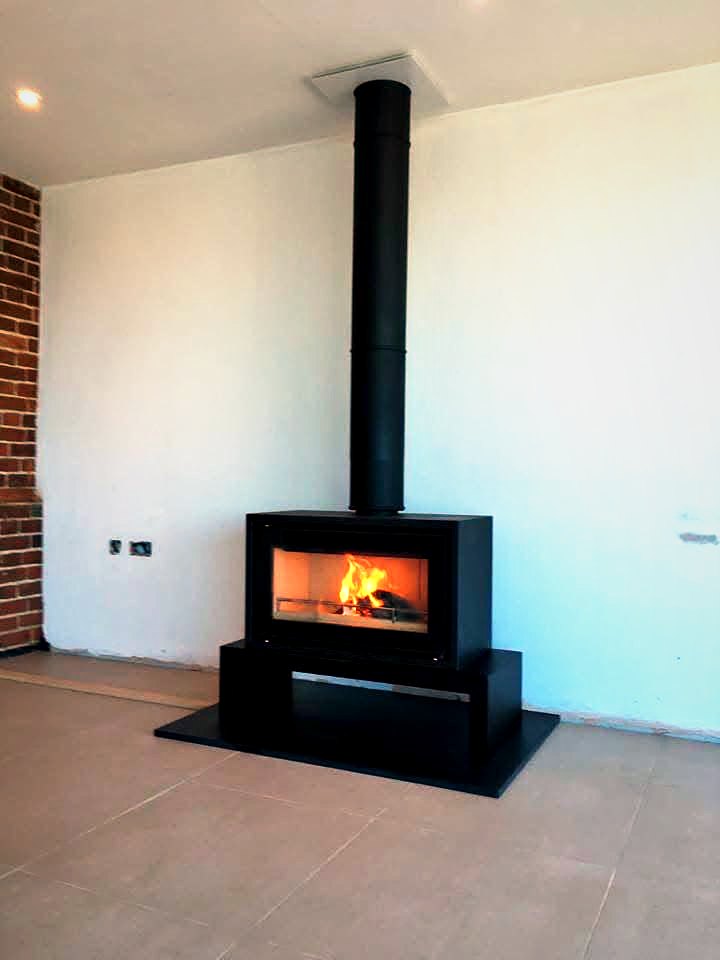 One of our installs
Roughly half the homes we visit now have no usable chimney. New-build estates, Stevenage’s New Town housing, kitchen extensions and conservatories were never built with one. You can still have a real wood burner; there are two ways to do it.
Option one: a twin-wall flue system
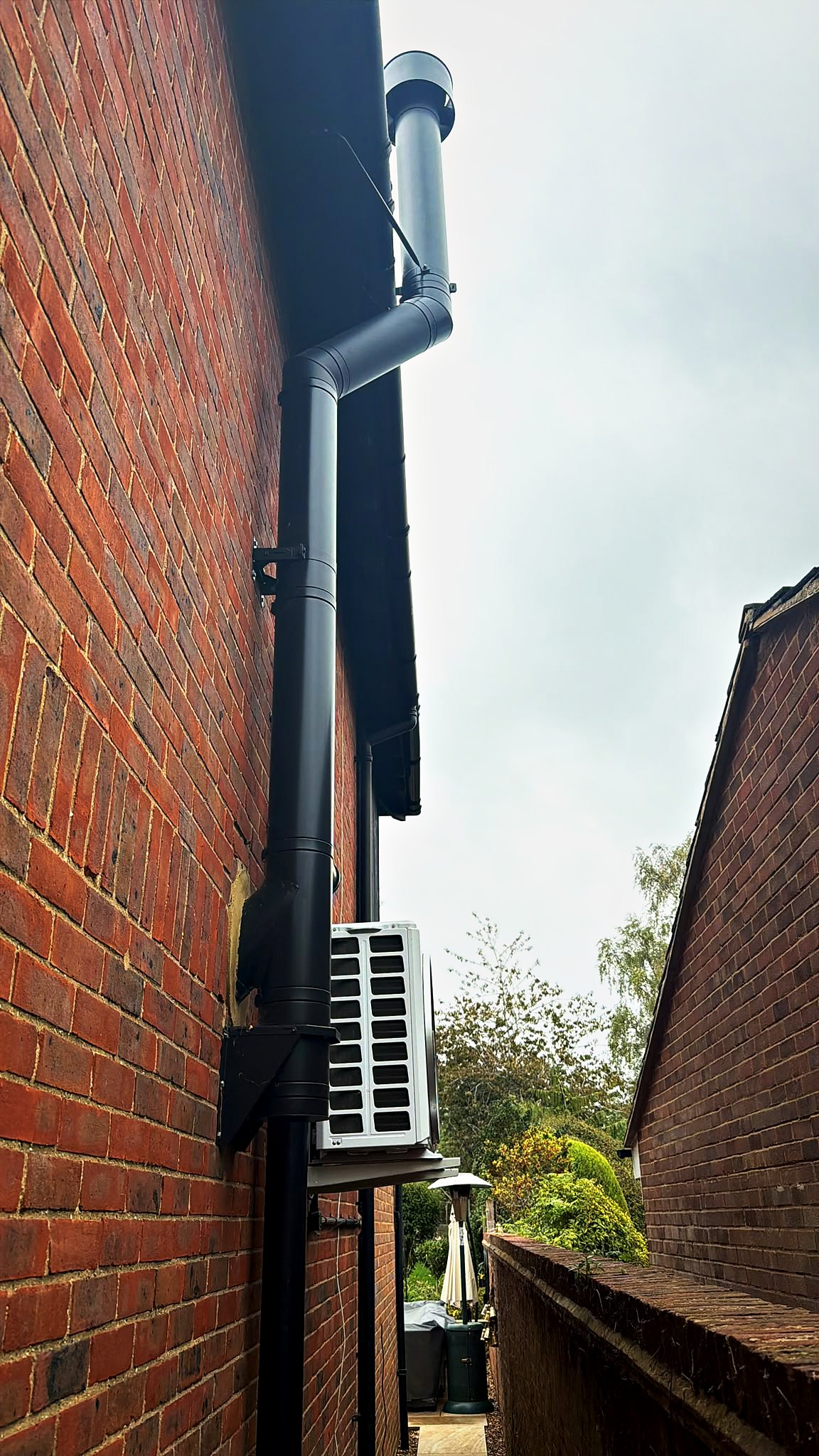
A twin-wall flue is a factory-made insulated chimney in stainless steel sections. It can run vertically through the ceiling and roof, or horizontally out through an outside wall and then up the side of the house to the right height above the roof. Outside it is usually matt black or stainless; inside it can be matched to the stove.
Good for: extensions, conservatories, garden rooms, any room on an outside wall. Time: usually about two days. Look: a visible flue pipe above the stove, which many people like in a modern room.
Option two: a false chimney breast
If you want it to look like the house always had a fireplace, we build one. A false chimney breast is a timber-framed, boarded and plastered chimney breast with a recess for the stove, a proper hearth, and the flue running inside it and straight out through the back wall. Decorated, it is indistinguishable from an original. You can add alcoves, a mantel or a beam.
Good for: living rooms in homes with no chimney, feature walls in extensions. Time: two to three days plus decorating. Look: a traditional fireplace with the flue hidden.
What has to be checked first
- The flue route and the clearances to joists, windows and neighbours
- How high the flue must finish above the roof
- Whether the wall is suitable for the flue to pass through
- The hearth size and the floor beneath it
- Planning: an external flue is usually permitted development, but front elevations in conservation areas and listed buildings need checking
- Smoke control: in most of London and parts of Hertfordshire you need a Defra-exempt stove
Which should you choose?
If the room is modern and the stove will be a feature in its own right, a twin-wall flue is quicker and cheaper. If you want a traditional fireplace and a focal point for the wall, a false chimney breast is worth the extra day. Tom will show you both options at the survey with the costs side by side.
Questions we get asked
Is an external flue ugly?
A matt black twin-wall flue on a rear or side wall is discreet and most people stop noticing it within a week. On a front elevation we would look at an internal route or a false chimney breast instead.
Can a twin-wall flue go through an upstairs bedroom?
Yes, it is designed to pass through floors and rooms with the correct clearances, usually boxed in.
Does a false chimney breast need foundations?
No. It is a lightweight framed structure; the stove sits on a hearth built to Approved Document J.
More guides
All guides
What a wood burner costs (2026)
What the national cost guides say a wood burning stove installation costs in 2026: labour, stove, flue liner,…
Stoves for homes with no chimney
The two ways to have a real stove in a home with no chimney: a false chimney breast with the flue out through…
Smoke control areas & Ecodesign rules
What the Clean Air Act smoke control rules, Ecodesign 2022 and Ready to Burn mean for your wood burner in…
Planning permission & building regs
When a wood burner needs planning permission, what Building Regulations Approved Document J requires, and why…
Be by the fire before the next cold snap
Peak season books up fast. Book a home survey and you’ll have a clear written quote to think about.